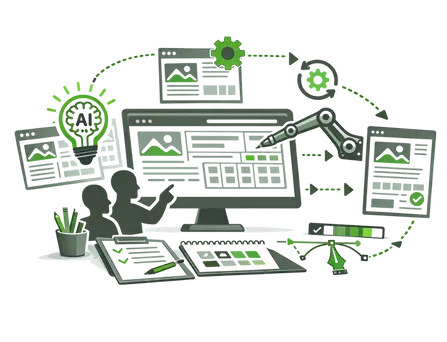











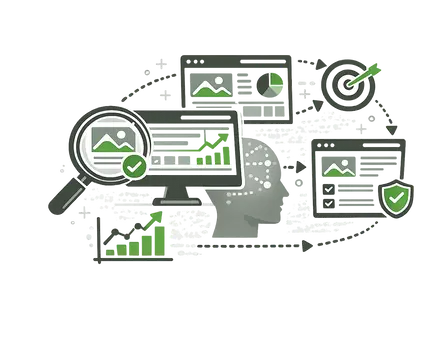
1. Analysis & UX audit
We start by analyzing existing pages, user behavior, and goals. The UX audit creates a reliable foundation for where optimization truly has impact—structure, content, or user guidance.
Websites and landing pages with high standards for design, structure, and performance require a clear, integrated approach. We create digital presences that meet exactly that standard. As an AI Web Design Agency, we think about design, UX, content, and technology holistically—and optimize them using data. The result: websites that guide users clearly and remain sustainably visible.
UX and conversion analyses are often based on isolated metrics, heuristics, or occasional tests. We evaluate user behavior, site structures, and conversion paths in context—and analyze them data-driven. This reveals not just symptoms, but structural weaknesses that can be prioritized and improved systematically.
With AI, first drafts and page structures become visible very quickly. Variants can be compared early and evaluated together before moving into detailed design. This shortens alignment loops, avoids detours, and brings clarity to the design process faster—one of the key strengths of an AI-driven web design company.
Landing pages are created modularly and scalable, so content, layouts, and variants can be adjusted flexibly. AI supports structure, content variations, and optimization along clearly defined goals. This approach pays off especially for campaigns or growing portfolios.
Visibility and performance determine whether great web design delivers real impact. As an AI Web Design Agency, we combine long-standing SEO and performance expertise with modern AI-supported analysis. Structure, loading speed, and technical foundations are continuously reviewed and improved—for websites that are not only well designed, but consistently discoverable.
Instead of treating launch as the finish line, we focus on ongoing development. Tests, user feedback, and performance data regularly flow into optimization. Teams gain clarity faster on which changes move the needle—and which do not.

We rely on applications that meet the current standards of modern AI web design agencies and work together strategically depending on the project. The deciding factor is not the quantity of tools, but their meaningful application in daily web design—supporting creation, analysis, and optimization.
As an AI Web Design Agency (and, where relevant, an AI design agency for digital experiences), we use a structured process that consistently connects design, implementation, and optimization.
We start by analyzing existing pages, user behavior, and goals. The UX audit creates a reliable foundation for where optimization truly has impact—structure, content, or user guidance.
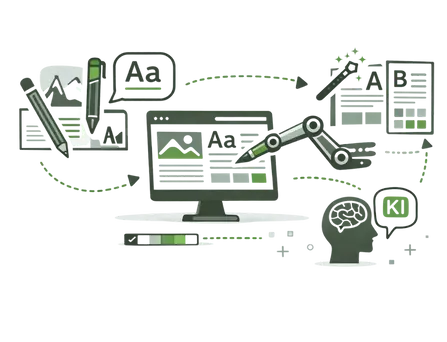
Based on the analysis, we build initial page structures and concepts. AI helps make variants visible early and compare approaches faster before decisions are finalized.
Design and content are developed together and aligned. AI supports drafts, text variants, and refinement—while design and tone remain clearly aligned with the brand.
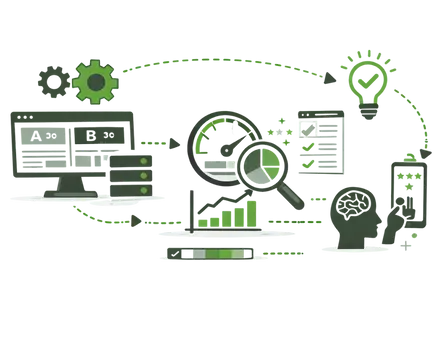
The website is implemented cleanly from a technical standpoint and tested systematically. Variants, performance, and user reactions already feed into optimization in this phase.
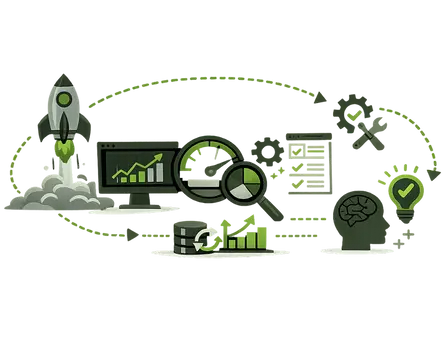
After launch, the project doesn’t end. Usage, performance, and visibility are monitored and improved so the website remains effective long-term.
In traditional web design, structure and layout are often created linearly and reviewed late. With an AI Web Design Agency, analysis, variation building, and optimization can be integrated much earlier in the process. This leads to better-founded decisions and fewer revision loops later on.
AI does not make design decisions for us in the sense of “right” or “wrong.” It helps make options visible, identify patterns, and better assess impact. The decision itself comes from experience, context, and objectives—supported by data, not replaced by algorithms.
AI is not used as a design template, but as a tool in the background. Brand identity, tone of voice, and visual signature are deliberately defined and developed further. This creates individual websites that use AI—without looking like AI.
We don’t rely on a fixed tool stack, but on a curated set of proven applications that we combine depending on the project. The task always comes first—not the tool. This keeps the process flexible and the result tailored to each website.
AI primarily shortens the early stages such as analysis, drafting, and design iterations. This allows decisions to be made sooner and projects to be implemented more structurally. Nevertheless, the final project timeline still depends on the overall scope, the depth of feedback cycles, and the specific objectives.